Methodology
How the Project Creates Impact
How the Project Creates Impact
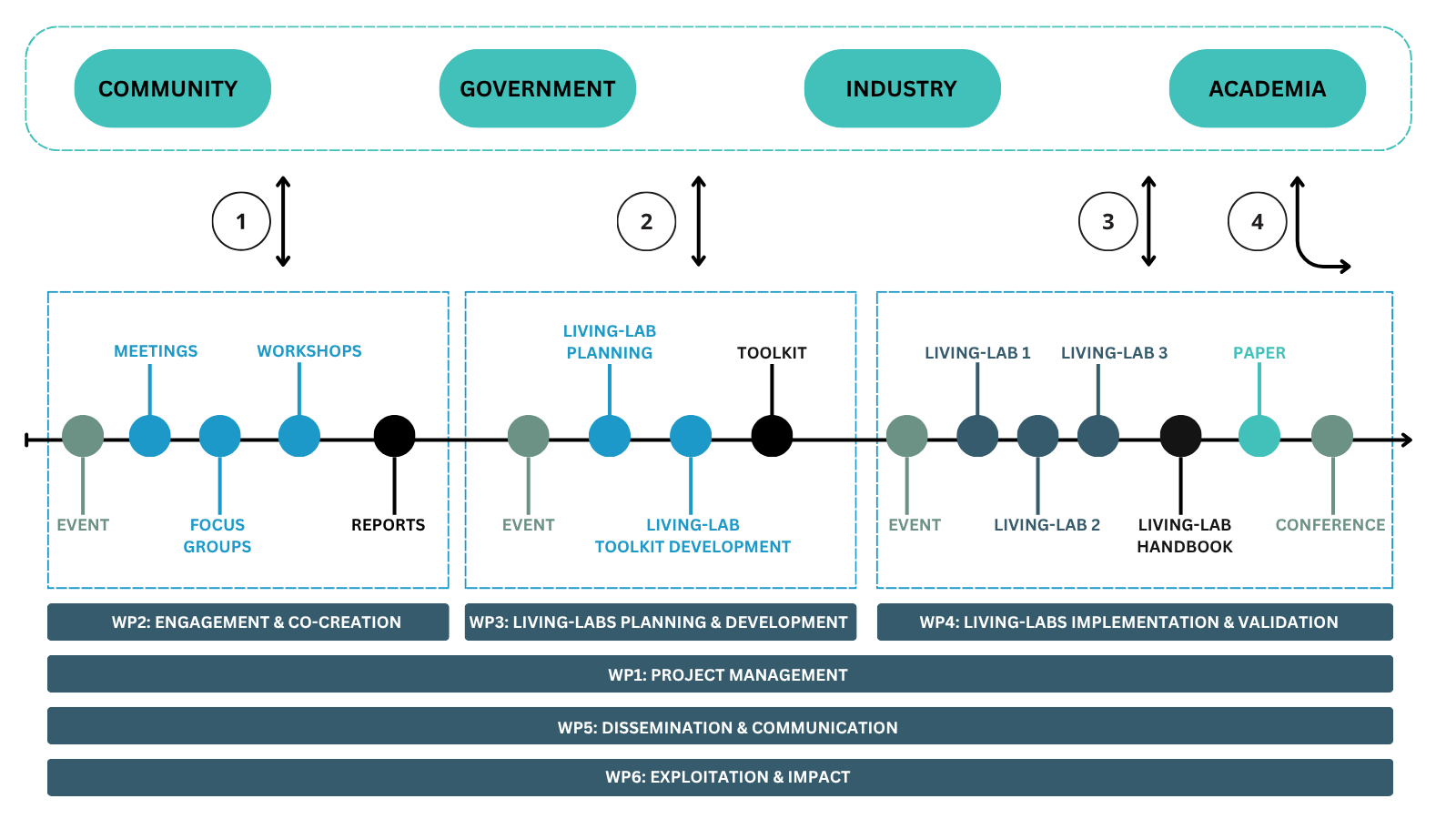
The project begins by analysing regional policies and labour market trends in the Earth Observation (EO) sector, ensuring alignment with national and European priorities.
At the same time, we engage actors from academia, industry (including SMEs), public authorities and civil society to identify real skills gaps, workforce challenges and opportunities for career development.
This collaborative process allows us to define the needs of managers, employees and career guidance professionals — especially within SMEs that often lack structured HR support.
Based on these insights, we develop an innovative career guidance framework tailored to adults working in or entering EO-related fields.
The framework combines:
Professionals are supported in identifying their competencies, setting realistic career goals and accessing relevant lifelong learning opportunities. The approach connects research and industry in a continuous exchange, ensuring that training pathways respond directly to market needs.
The developed models are implemented and refined through regional Living Labs across Europe.
In these real-life settings, SMEs, employees, educators and public actors collaborate to test guidance tools, training approaches and mentoring methods. Feedback is continuously integrated to improve effectiveness and adaptability.
The Living Labs are designed to be inclusive, regionally adaptable and connected to existing European digital infrastructures, ensuring long-term usability and avoiding duplication of efforts.
Beyond pilot activities, the project focuses on embedding results into regional and national systems.
By working closely with policy-makers and funding ecosystems, we ensure that the developed models remain scalable, transferable and sustainable after the project ends.